A useful agent can reach the systems where work happens. That access also makes its mistakes consequential. Before connecting an agent to a business API, define the action it may perform and the authority required to perform it.
Amazon Bedrock AgentCore provides capabilities for agent deployment and tool connectivity. Those capabilities still need an application-specific permission model. A runtime identity is not a substitute for the permissions of the person who requested the work.
Distinguish the user from the workload
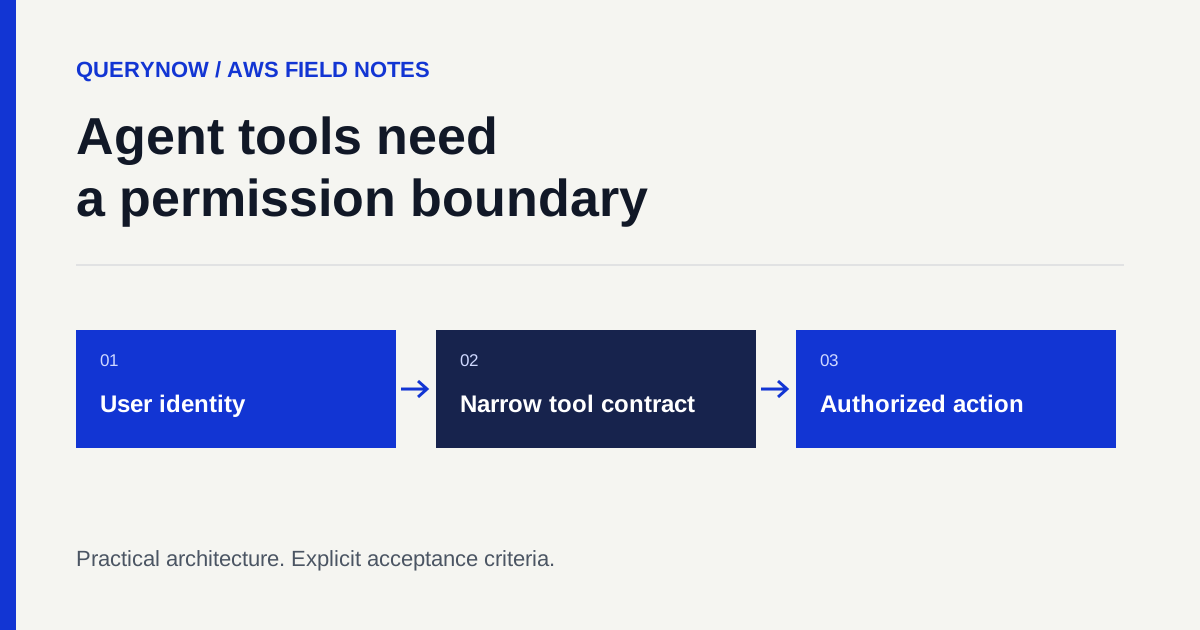
Record who initiated the request and which workload executes it. A service identity may be able to connect to an internal system, but that alone should not authorize every requested operation. Check the user's permitted business scope before the tool call.
For a reference procurement assistant, a buyer may inspect orders for one business unit. The service credential might technically reach the whole procurement API. The tool must constrain the request to the buyer's authorized unit, using trusted identity context rather than a value supplied in the conversation.
Define tools as business operations
A tool named for an approved operation is easier to govern than a general API proxy. Prefer a contract such as retrieving the status of an authorized purchase order over a tool that accepts an arbitrary URL or database statement.
Validate the input at the tool boundary. Reject unexpected fields and unsupported operations. The model's instruction to use a tool correctly is useful guidance, but it does not replace server-side validation.
Separate read access from side effects
Start with a read-only operation where practical. Adding a write operation should trigger a separate review of authority, failure handling, and recovery. A permission to inspect a record should not silently become a permission to amend it.
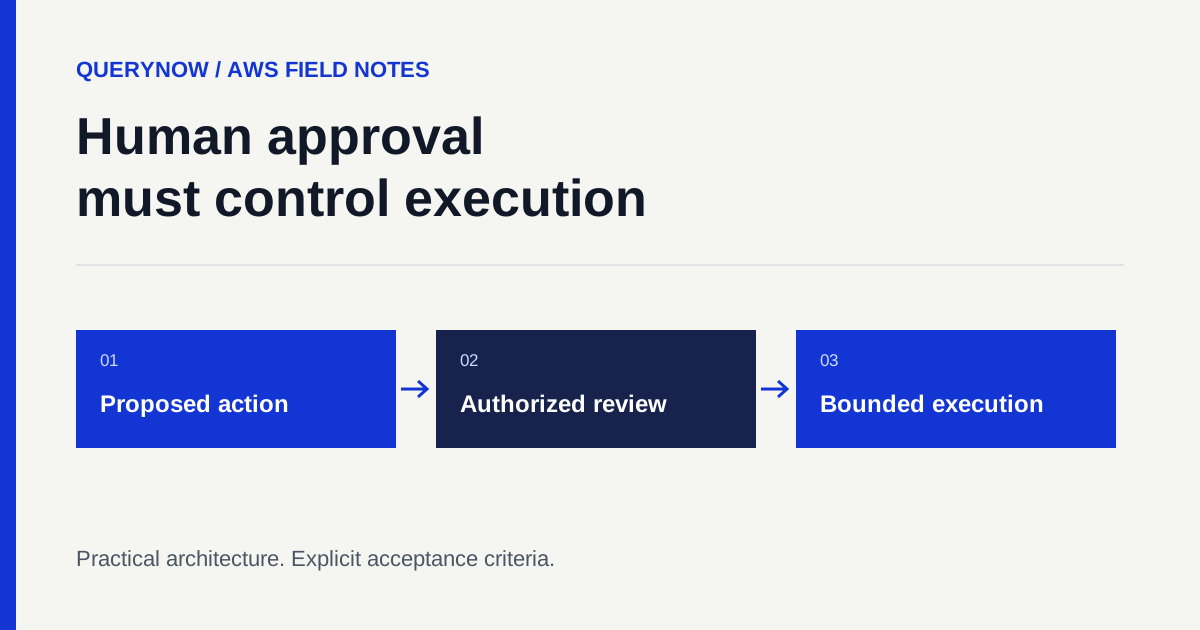
For a consequential action, produce a precise proposal for review. Identify the record to change and the intended change. The eventual execution should match the approved proposal rather than letting the agent reinterpret the action after approval.
Treat tool output as data
A document or API response can contain text that looks like an instruction. Keep retrieved content from redefining the agent's role or adding authority. The application should enforce the same tool restrictions even when source content asks it to do something else.
Test this boundary with deliberately hostile source text. A useful result is an auditable refusal to perform an unauthorized operation, not merely an answer that sounds cautious. Inspect the actual tool-call history.
Make execution records useful to an operator
Record the request identifier and the tool selected, together with the authorization decision and result. Decide which fields are necessary for support and which would expose sensitive data if logged. Access to these records needs its own policy.
Use a correlation identifier across the agent runtime and downstream application. An operator should be able to determine whether a tool failed, was denied, or completed without receiving an acknowledgment. These conditions need different recovery actions.
Set a narrow release gate
- An out-of-scope record is rejected before the downstream operation.
- A source document cannot grant the agent a new tool permission.
- A read-only user cannot invoke a write operation.
- A reviewed proposal cannot be changed silently before execution.
- The support team can trace one request without reading unrelated user data.
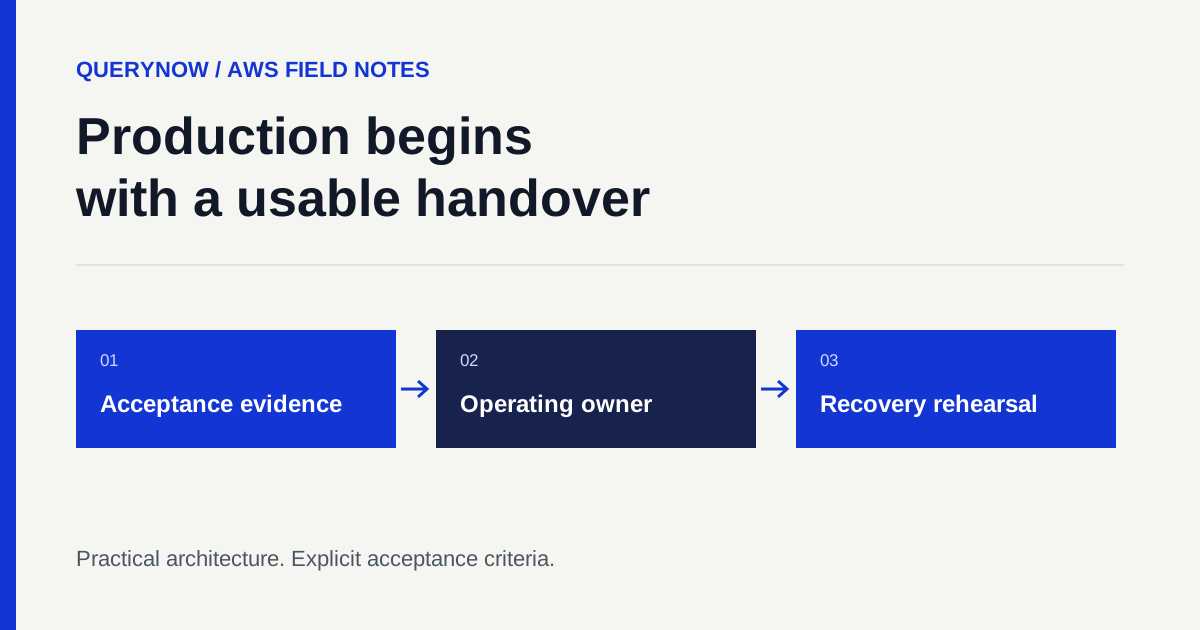
Expand the tool set only after the first operation has a clear owner and a tested recovery path. The service catalog should grow with the permission model.
Put one workflow into production
QueryNow scopes AWS AI workflows around your existing systems. We agree the deliverables and acceptance criteria before the build. One bounded workflow starts at $10,000, payable only after every agreed criterion is met. We build it in your environment in two weeks. Wider data programs are scoped separately, and AWS usage is separate from the build fee. Tell us the workflow.
Technical references
Ready to ship AI in your organization?
We build one workflow into a working tool in two weeks. You pay $10,000 only after every acceptance criterion you signed off on is met.
One workflow · Two-week build · $10,000, paid on delivery
QueryNow
QueryNow deploys production AI for enterprises on Azure, AWS, or Google Cloud. Founded in 2014, we help pharma, healthcare, manufacturing, and financial services organizations deploy governed AI systems. We build it, you pay when it works.
Learn more about us →