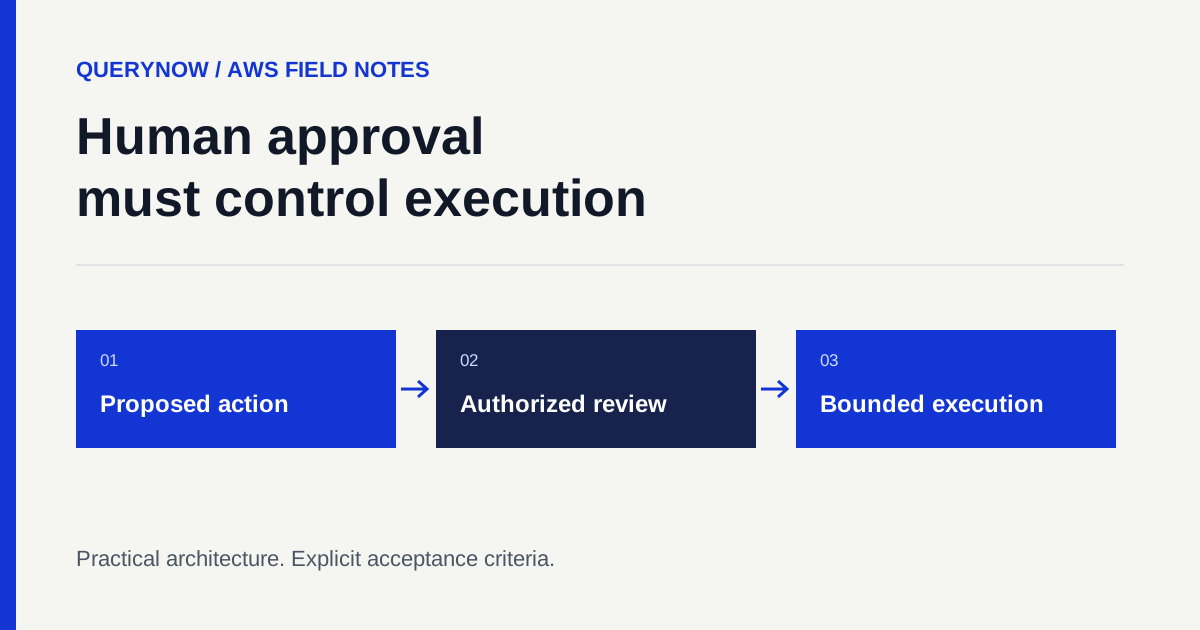
A button labeled approve is not enough. The system must know what the person approved, whether they had authority, and whether the action later executed is the same action they reviewed.
For an AWS AI workflow, keep the model's recommendation separate from the business authorization. AWS Step Functions can support a process that waits for an external decision. The surrounding application must still establish who is allowed to make that decision.
Create an immutable action proposal
Before requesting approval, record the intended operation and the relevant business record. Include the values that will change and the evidence the reviewer needs. Give the proposal a stable identifier and a version.
If the source record changes while the request waits, determine whether the proposal is still valid. A supplier detail approved yesterday may no longer be current today. Define when the workflow must obtain a new review rather than applying an old decision to new data.
Authenticate the approver
An email notification can tell someone that review is needed. It should not replace an authenticated approval experience. Check the person's authority when they open the proposal and again when they submit the decision.
A forwarded link should not transfer authority to its recipient. The application needs to resolve the authenticated identity and check whether that identity can approve this particular action. Store the decision with the proposal version and an execution correlation identifier.
Treat callback tokens as sensitive
Step Functions documents a callback pattern in which a task waits for a token-based completion signal. Keep the token under application control and map the business approval to the corresponding waiting task. Do not treat possession of a broadly shared link as sufficient business authorization.
Account for expiration and duplicate responses. A reviewer who clicks twice should not create two downstream operations. A late approval after cancellation should receive a clear response and must not revive the canceled work.
Make rejection a normal outcome
The reviewer needs a useful way to decline or request a correction. Decide whether a corrected proposal creates a new version or a new request, and retain enough history to explain the decision. Do not quietly edit an already approved proposal.
Also define what happens when nobody responds. Escalation should move the request to another authorized person, not automatically approve it. Set expectations for the requester so a waiting workflow does not appear to have disappeared.
Execute only the approved change
Revalidate the proposal before the downstream call. Check that it is approved, current, and not already executed. Use an idempotency mechanism where the destination supports it, with a reconciliation process for uncertain results.
The agent should not reinterpret the instruction between approval and execution. If it discovers that a different action is required, the changed proposal needs the relevant business checks again.
Test authority as well as usability
- An unauthorized employee cannot approve a forwarded request.
- A changed proposal invalidates the earlier approval.
- A denied request never reaches the write operation.
- An expired callback cannot restart canceled work.
- A repeated approval produces at most one business action.
These tests turn human oversight into a control the system can demonstrate. They also give the support team a clear explanation when a user asks why an action is still waiting.
Put one workflow into production
QueryNow scopes AWS AI workflows around your existing systems. We agree the deliverables and acceptance criteria before the build. One bounded workflow starts at $10,000, payable only after every agreed criterion is met. We build it in your environment in two weeks. Wider data programs are scoped separately, and AWS usage is separate from the build fee. Tell us the workflow.
Technical references
Ready to ship AI in your organization?
We build one workflow into a working tool in two weeks. You pay $10,000 only after every acceptance criterion you signed off on is met.
One workflow · Two-week build · $10,000, paid on delivery
QueryNow
QueryNow deploys production AI for enterprises on Azure, AWS, or Google Cloud. Founded in 2014, we help pharma, healthcare, manufacturing, and financial services organizations deploy governed AI systems. We build it, you pay when it works.
Learn more about us →