The best first AI contract project begins with a contract type your firm already understands. Choose a repeatable agreement with a current playbook, and a lawyer who can explain which deviations matter.
That gives the system a defined task. It can locate clauses, compare them with approved positions, and assemble a review table. The lawyer still decides how the agreement should change for the client and the transaction.
Starting this way makes the project easier to test. You can compare the assistant's work with a professional review instead of judging a general legal chatbot by how persuasive its answer sounds.
Choose one contract family
An NDA practice, a vendor agreement process, and a complex acquisition agreement require different judgments. Putting all three into the first project creates a vague definition of success.
Select a contract family with enough recurring volume to matter, then identify the versions of the firm's preferred language, the fallback positions, and the conditions that require partner attention. Where lawyers disagree, resolve the rule or mark the issue as discretionary.
An AI system cannot repair an undefined policy by itself. If every reviewer has a different view of an acceptable clause, the first useful deliverable may be a better playbook.
Make the output easy to challenge
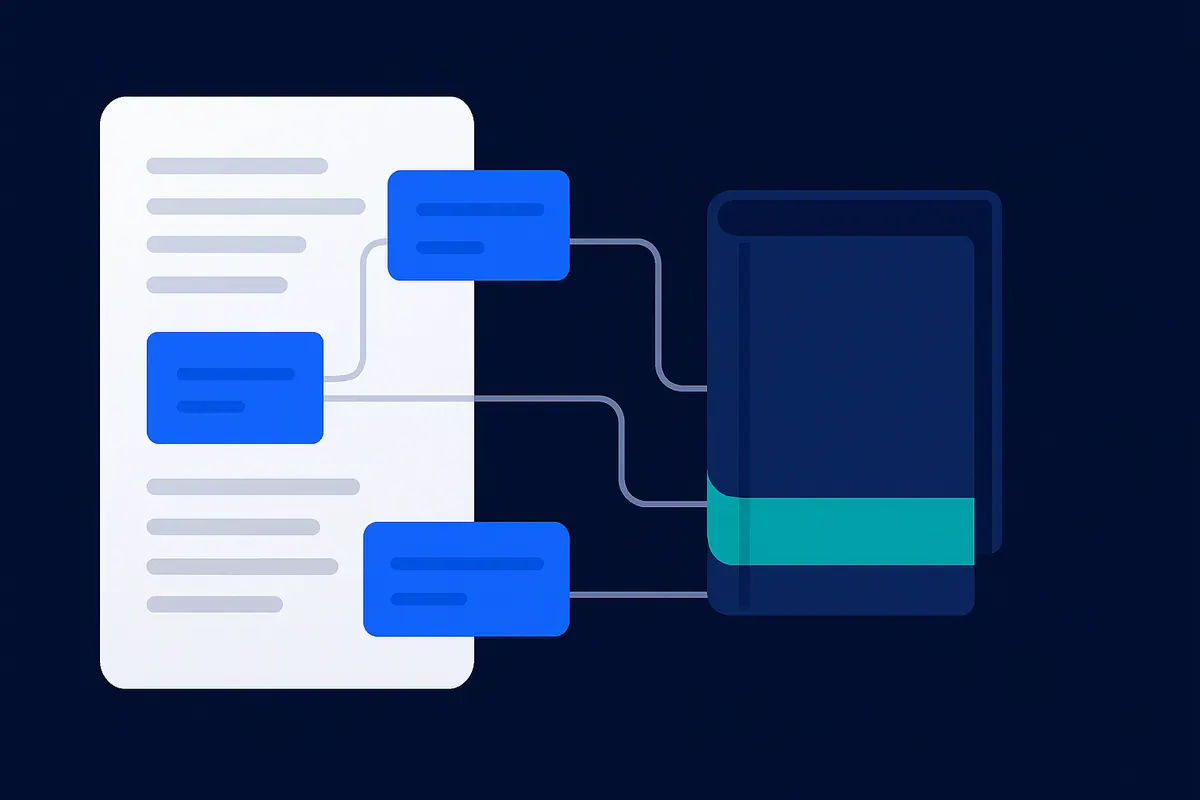
For each issue, show the original clause, its location, the relevant playbook rule, and the proposed change. If a required provision is absent, the output should say that it was not found rather than generate a quotation that merely sounds like contract language.
A reviewer should be able to move from the suggestion to the evidence without rerunning a search. Track the document version, because a page reference from yesterday's draft may point to different text today.
Separate playbook comparison from external legal research. The firm's precedent library is not a substitute for checking current law, and research may require licensed sources, jurisdiction-specific review, and verification that an authority remains valid.
Preserve matter access
The assistant should retrieve only information the user is authorized to see. That includes document permissions, matter restrictions, and ethical walls.
A common design mistake is to export documents into a single searchable collection and lose the original access rules. Another is to give the underlying service broad access and assume the prompt will prevent disclosure. Neither is an adequate permission design.
Test with different user roles by asking an authorized lawyer and an unauthorized user the same question, then checking search results, generated answers, citations, and downloadable files. Confidentiality can fail through an attachment even if the main answer looks correct.
Keep professional judgment visible
Allen & Overy's 2023 announcement of its generative AI rollout described lawyer review as necessary. That is a useful starting principle for a smaller firm too, although adoption by a large firm does not remove the need to test a particular workflow.
The American Bar Association's Formal Opinion 512 addresses duties including competence, confidentiality, communication, and fees. Your firm should assess applicable rules and client arrangements before deployment. Software cannot guarantee privilege or make the lawyer's verification responsibility disappear.
Design the review screen around the judgment the lawyer must make. An approve-all button may save clicks while making important errors easier to miss, so group issues by significance and make uncertain conclusions visible.
Measure omissions as well as false alarms
A contract assistant can fail by missing a material issue. It can also fail by producing so many irrelevant flags that the lawyer spends longer reviewing its work than reading the agreement.
Test for both. Ask experienced lawyers to identify the material issues in a held-out set of contracts, compare the assistant's recall with that reference, and record how many flags were unnecessary.
Include scanned documents, missing schedules, unusual formatting, contradictory provisions, and revised drafts. Record whether each problem came from extraction, retrieval, the playbook, or reasoning, because each of those needs a different fix.
A pilot with no critical errors is encouraging, but it does not prove a future error rate of zero. Continue reviewing and sampling after release.
Treat time savings carefully
Suppose, as a hypothetical, a practice reviews 240 eligible agreements monthly and reduces total first-pass work from 60 to 40 minutes, including AI review. That recovers 80 hours.
Using an assumed $85 loaded hourly cost gives $6,800 of gross capacity value. At 60% realization and $2,000 in monthly operating costs, the hypothetical net value is $2,080. These are planning inputs and do not promise an outcome.
Do not substitute the billing rate for the cost rate and call the result savings. A firm on hourly fees may recover capacity without automatically increasing revenue, while a fixed-fee practice may use the same improvement differently. Discuss client value and pricing with the partners responsible for the business.
Buy what already exists and build the missing parts
Review the capabilities in your document system and specialist legal AI products first. They may already provide the drafting or comparison function you need.
A custom project is more compelling when the difficulty lies in your firm's playbook, permissions, document flow, or reporting. QueryNow can help define that scope through its legal AI services.
Bring one contract family, the current playbook, and examples that caused experienced reviewers to disagree. Those materials reveal whether the project is ready and what its acceptance criteria should be.
Questions law firms ask
Does a citation make an answer reliable?
It makes the answer easier to check. The cited text may still be irrelevant, outdated, or interpreted incorrectly.
Can AI replace lawyer review?
This approach uses AI to prepare review work. A qualified lawyer remains accountable for the legal output.
What is the most useful pilot measure?
Track material issues found and missed, unnecessary flags, and total lawyer time after corrections.
Ready to ship AI in your organization?
We build one workflow into a working tool in two weeks. You pay $10,000 only after every acceptance criterion you signed off on is met.
One workflow · Two-week build · $10,000, paid on delivery
QueryNow
QueryNow deploys production AI for enterprises on Azure, AWS, or Google Cloud. Founded in 2014, we help pharma, healthcare, manufacturing, and financial services organizations deploy governed AI systems. We build it, you pay when it works.
Learn more about us →