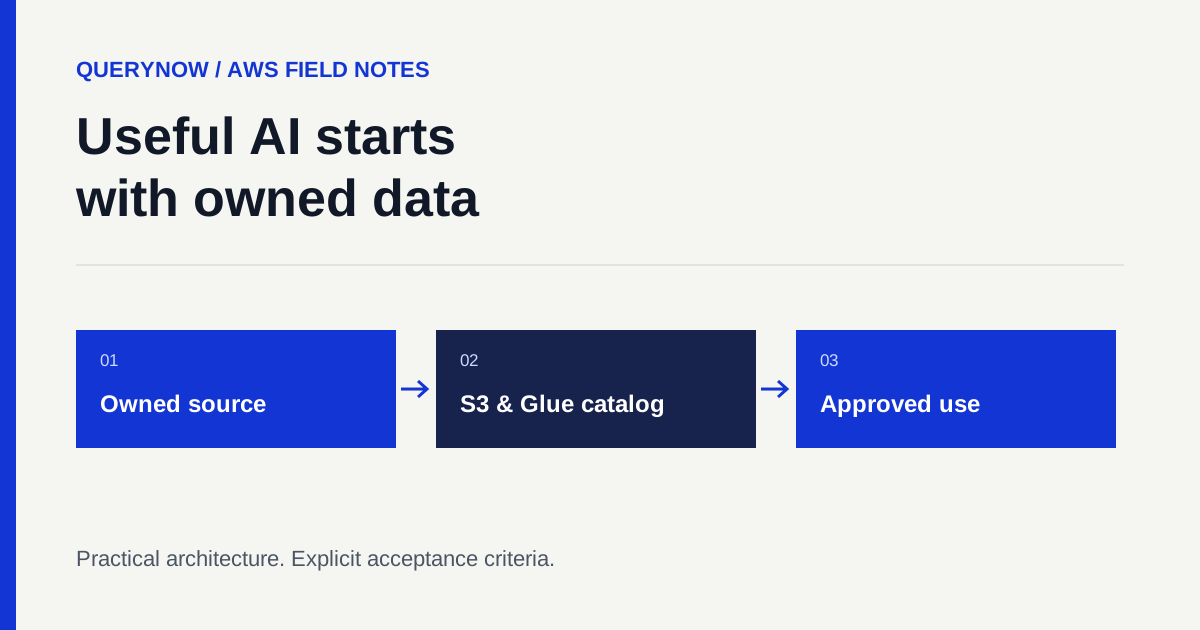
An AI assistant cannot resolve a disagreement about what a business field means. If two teams define an active supplier differently, a model can produce a fluent answer from either definition. The data foundation must settle which definition the workflow uses.
On AWS, Amazon S3 and AWS Glue Data Catalog can form part of that foundation. The first deliverable should be a trustworthy path from one source to one business question, with an owner who can explain both ends.
Start with a data contract
Choose a dataset that supports a defined decision. Record the business meaning of its fields and who owns corrections. Specify the refresh expectation and what the application should do when the data is older than that expectation.
For a reference supplier-onboarding workflow, distinguish submitted documents from approved supplier records. The assistant must not present an application as an approved relationship. This distinction should exist in the source contract, rather than only in a prompt.
Keep source and prepared data distinguishable
Preserve a traceable relationship between received data and the version prepared for use. Decide how an invalid record is quarantined, how a corrected record replaces it, and which identifier links the two. These are operating decisions even in a small project.
Avoid treating every file in a bucket as approved for AI use. Separate collections by their purpose and access requirements. Document which paths a workload can read and how those permissions change when a dataset is promoted for business use.
Catalog meaning as well as structure
A catalog entry helps a team discover a table and its schema. It does not by itself explain whether a field is reliable enough for a decision. Add useful descriptions and ownership information to the operating documentation around the catalog.
Where automated discovery is used, review the result. A data type inferred from a sample does not establish the business rules for that column. Check identifiers with leading zeros, date conventions, and fields whose units vary across sources.
Choose storage conventions around the workload
Consider the expected access pattern before choosing partitions or a table format. A daily aggregate query has different needs from frequent corrections to individual records. Start with the smallest design that supports the agreed refresh and query requirements.
Do not add a table format solely because it appears in an architecture diagram. Write down the operational benefit you need, such as controlled record updates or reproducible snapshots. Then account for the maintenance and access-control behavior of the tools you plan to use.
Test one question from end to end
- Identify the authoritative source record for the business question.
- Show the transformation that makes the record available for use.
- Confirm the approved definition appears in the catalog documentation.
- Demonstrate how stale or invalid data changes the application response.
- Trace the answer back to the source version used.
A successful test should be understandable to the data owner, not just the engineer. If the owner cannot explain why the answer is correct, the project needs more work on meaning or lineage before adding a conversational interface.
Expand dataset by dataset after this path works. That approach gives the team a reusable approval process and a clear way to estimate the next integration. It also prevents a narrowly scoped AI workflow from becoming an unbounded data-platform program.
Put one workflow into production
QueryNow scopes AWS AI workflows around your existing systems. We agree the deliverables and acceptance criteria before the build. One bounded workflow starts at $10,000, payable only after every agreed criterion is met. We build it in your environment in two weeks. Wider data programs are scoped separately, and AWS usage is separate from the build fee. Tell us the workflow.
Technical references
Ready to ship AI in your organization?
We build one workflow into a working tool in two weeks. You pay $10,000 only after every acceptance criterion you signed off on is met.
One workflow · Two-week build · $10,000, paid on delivery
QueryNow
QueryNow deploys production AI for enterprises on Azure, AWS, or Google Cloud. Founded in 2014, we help pharma, healthcare, manufacturing, and financial services organizations deploy governed AI systems. We build it, you pay when it works.
Learn more about us →